
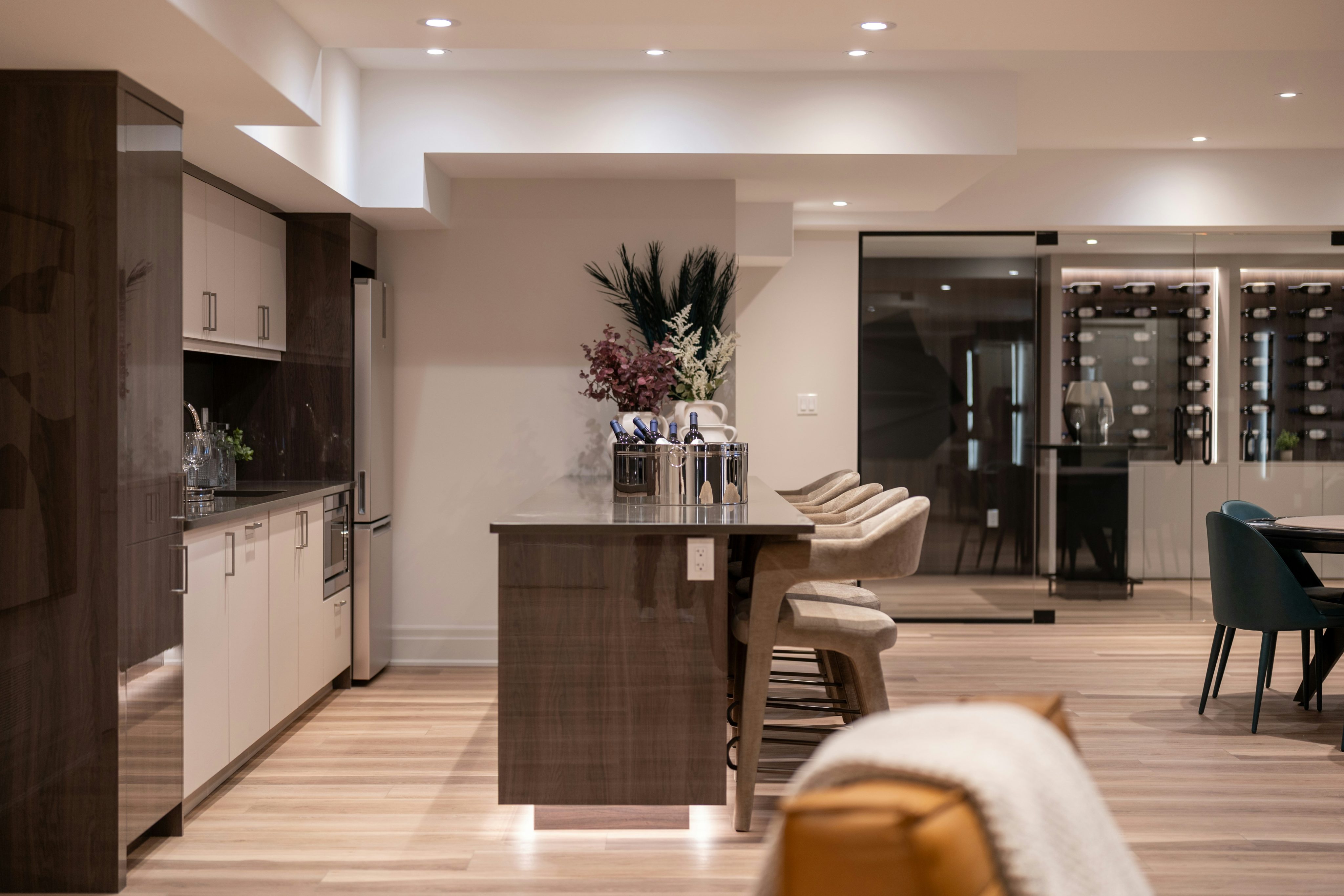
If you grew up in southeastern Michigan, you already know that a basement is rarely just a place for a furnace and holiday decorations. From the classic mid-century brick ranches of St. Clair Shores and Warren to the sprawling newer builds in Macomb Township and Rochester Hills, the finished lower level is an cultural institution. In our market, it functions as a secondary family room, a home office, or the ultimate entertainment hub.
For sellers looking to maximize their return, a beautifully finished basement is a major selling point, but pricing it correctly requires a dose of reality. Appraisers do not value below-grade square footage the same way they value above-grade living space. If you spent sixty thousand dollars building a custom bar and a daylight theater room in Shelby Township, you cannot simply add that square footage to your main level total and expect a linear price increase. The true value lies in the lifestyle premium it offers to buyers looking to maximize their usable footprint without paying higher property taxes for a larger above-grade structure.
For buyers scouting homes along the Woodward Corridor or deep into Macomb County, a finished basement demands a careful inspection. Before falling in love with a subterranean wet bar, look for signs of Michigan's notorious seasonal moisture. Check the baseboards for efflorescence, test the sump pump, and verify if the lower-level bedrooms feature proper egress windows. In Oakland and Macomb counties, a basement without a functioning backup sump pump system is a liability, not an asset. When bought or sold with a clear understanding of its structural integrity and structural value, the basement remains one of the smartest investments in local real estate.
Curious how much your finished lower level actually adds to your home’s market value? Contact our team today to request a custom valuation report and see how buyers in your specific neighborhood price these unique bonus spaces.
Check out this article next
